

Your message has been successfully sent.
Our managers will definitely contact you
Interesting Facts About Toilet Paper, Paper Towels, and Napkins
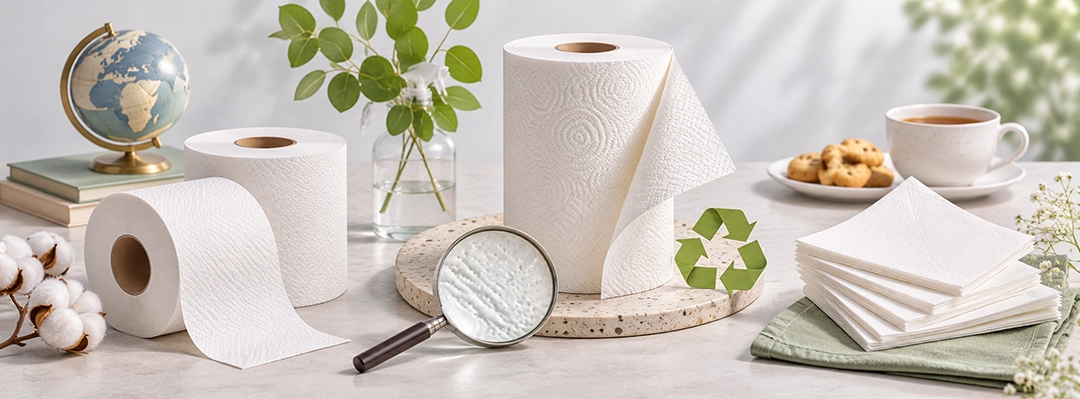
Toilet paper, paper towels, and napkins have become an essential part of everyday life. However, this was not always the case. Just a few centuries ago, people were unfamiliar with these paper products.
Interesting Facts About Toilet Paper
1.The first toilet paper was invented in China as early as the 6th century AD. However, it did not become widely used until the 14th century, when it was available mainly to the emperor and his family.
2.The transition to more widespread use of toilet paper began in the mid-19th century in the United States. In 1857, Joseph Gayetty introduced his product to the market. It was made from soft paper, with the manufacturer’s watermark on each sheet. The product was marketed as “medicated paper,” offering improved personal hygiene.
3.An interesting fact about toilet paper rolls is that they often contain 500 or 1,000 sheets. However, manufacturers frequently experiment with roll sizes to stand out from competitors. For example, in 2011, Charmin introduced an XXL roll containing 1.5 million sheets! This enormous roll was created specifically for a promotional campaign and became a remarkable attraction in the world of toilet paper.
Modern toilet paper has undergone significant changes compared to its early versions. Today, it is available in various forms, from single-ply to three-ply, with added fragrances, moisturizing
Paper Towels: History and Uses
The history of paper towels began by accident in 1907 in the United States. Arthur Scott, an employee of a paper mill, received oversized rolls of paper that were inconvenient to use. He decided to cut them into individual sheets and sell them as “kitchen towels.” In doing so, he not only saved the business from a potential loss but also created a new product that became highly popular among consumers.
Paper towels play an important role in modern life, particularly in maintaining hygiene. They are convenient for use at home and in the workplace, and they help maintain cleanliness in public spaces such as restaurants, schools, airports, and other facilities.
Despite the growing popularity of electric hand dryers, studies suggest that paper towels can be more effective at limiting the spread of bacteria in certain settings. Their high absorbency and single-use nature help reduce the risk of transferring bacteria between users.
Napkins: From Simplicity to Elegance
1.The history of napkins dates back to the ancient Roman Empire. However, the earliest napkins were very different from those we use today. They were large pieces of fabric used to wipe hands during meals.
2.Modern napkins appeared in the 19th century. Initially, they were used mainly by wealthy families, but by the beginning of the 20th century, mass production of napkins for everyday use had begun.
3.Today, paper napkins are an essential part of table settings. They not only enhance elegance and style but also help maintain cleanliness during meals. However, napkins are not limited to table settings. They are also widely used in hotels, restaurants, the aviation industry, and many other sectors.
4.Among paper products, napkins are one of the most diverse categories. They come in various shapes, sizes, and colors and can feature different patterns, designs, or printed logos.